What Can a VPN Provider See?
A beginner-friendly explanation of VPN trust, data boundaries, browsing history, DNS queries, raw traffic content, and what users should check.
Quick Answer
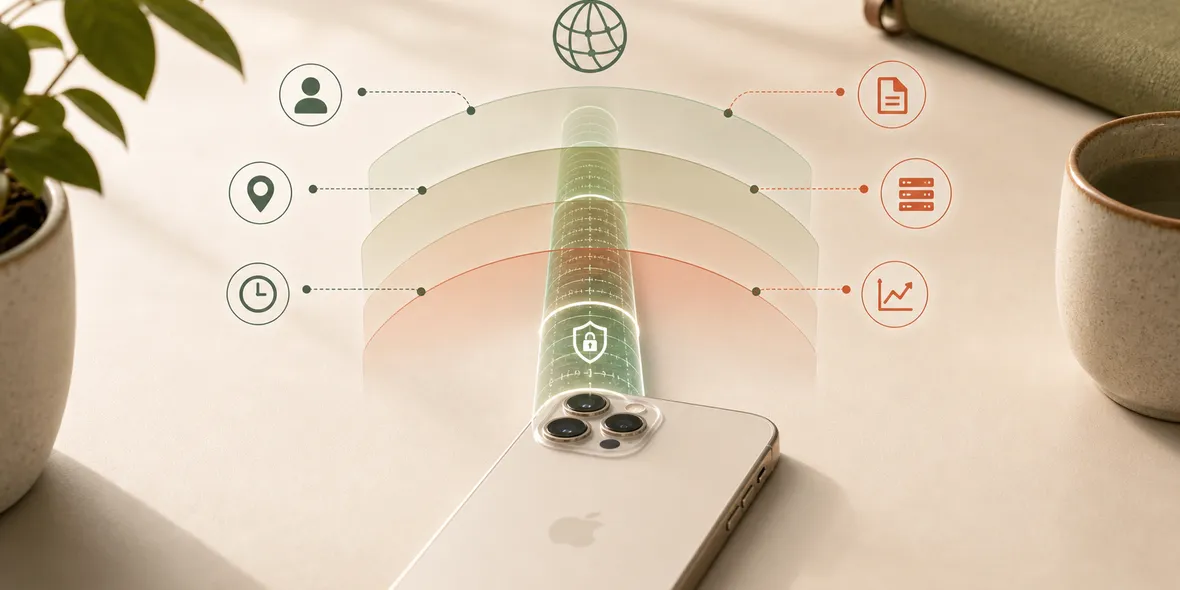
A VPN provider is part of your connection path, so trust matters. A good VPN should clearly explain what it collects and what it does not collect. Sovatun's boundary is specific: it does not collect browsing history, visited URLs, DNS query details, or raw traffic content.
Best For
Search Intent
The reader wants to know what a VPN provider can see and what privacy wording to look for.
Shareable Angle
The most important VPN question is not only what it hides from Wi-Fi. It is what the VPN itself promises not to collect.
When people first learn about VPNs, they often ask what the Wi-Fi owner can see.
That is a good question. But there is another question that matters just as much: what can the VPN provider see?
A VPN changes the connection path. Instead of your iPhone connecting directly through the local network, your traffic goes through the VPN tunnel. That means the VPN provider becomes part of the trust chain.
This is why vague privacy slogans are not enough.
The Simple Answer
A VPN provider is in an important position, so you should check what it says it collects and what it says it does not collect.
Good privacy wording should name specific categories:
- browsing history
- visited URLs
- DNS query details
- raw traffic content
- diagnostics
- account data
- purchase data
- usage data
The more specific the wording, the easier it is for a normal user to understand.
Why “No-Log” Can Be Too Vague
“No-log VPN” sounds good, but it can be unclear.
No logs of what? Browsing history? Connection timestamps? Device data? Payment data? Crash reports? Support messages? Usage totals?
A better privacy explanation separates categories.
For example, a VPN may need account information or purchase records to run the service. It may show usage so users understand their plan. It may offer optional diagnostics for support.
Those are different from collecting browsing history or raw traffic content.
A Real Situation
Imagine you are choosing between two VPN apps.
One says “full privacy guarantee.”
The other says it does not collect browsing history, visited URLs, DNS query details, or raw traffic content, and then explains account, usage, support, and diagnostics data.
The second explanation is more useful because you can actually understand the boundary.
Trust is not built by louder words. It is built by clearer words.
What Users Should Check
Before trusting a VPN provider, check:
- Who runs the service?
- Does the app include official locations?
- Does it need an external config or node provider?
- What browsing-related data does it say it does not collect?
- What account or purchase data does it need?
- Is usage visible?
- Is support available?
- Are diagnostics optional and explained?
This is not about becoming technical. It is about knowing who you are trusting.
What A VPN Still Does Not Control
Even if the VPN provider has strong data boundaries, a VPN does not control every app or website.
If you sign into a website, that website knows your account. If you allow location permission, an app may know your location. If you click a fake login link, the VPN does not make the link safe.
So the right privacy model is layered:
- VPN for connection layer
- app settings for app behavior
- password manager for login safety
- two-factor authentication for accounts
- careful link habits for phishing
Why This Matters More For New VPNs
New VPN products need to earn trust.
They should not rely on big claims. They should explain setup, official locations, usage, support, diagnostics, and data boundaries in plain language.
This is especially true for iPhone users who do not want to manage third-party configs or technical node providers.
Where Sovatun Fits
Sovatun is designed as a simple all-in-one iPhone VPN with official locations built into the app.
It does not ask normal users to import external subscription links, scan QR codes, buy separate nodes, or choose protocols before connecting.
Its privacy boundary is specific: Sovatun does not collect browsing history, visited URLs, DNS query details, or raw traffic content.
Bottom Line
A VPN provider is part of your trust chain.
Do not choose a VPN only because it says “private.” Choose one that explains what it does, what it does not collect, how setup works, and how users can stay in control.
Quick Questions
Can a VPN provider see my traffic?
A VPN provider is part of the connection path, so users should check the provider's technical design and privacy policy. Look for specific statements about browsing history, URLs, DNS query details, and raw traffic content.
Is no-log enough?
No-log is useful only when it is explained clearly. Users should look for specific data categories, not just a slogan.
What does Sovatun say?
Sovatun says it does not collect browsing history, visited URLs, DNS query details, or raw traffic content.