What Does a VPN Do on iPhone?
A plain explanation of what an iPhone VPN does, when normal users need one, and how Sovatun keeps it simple.
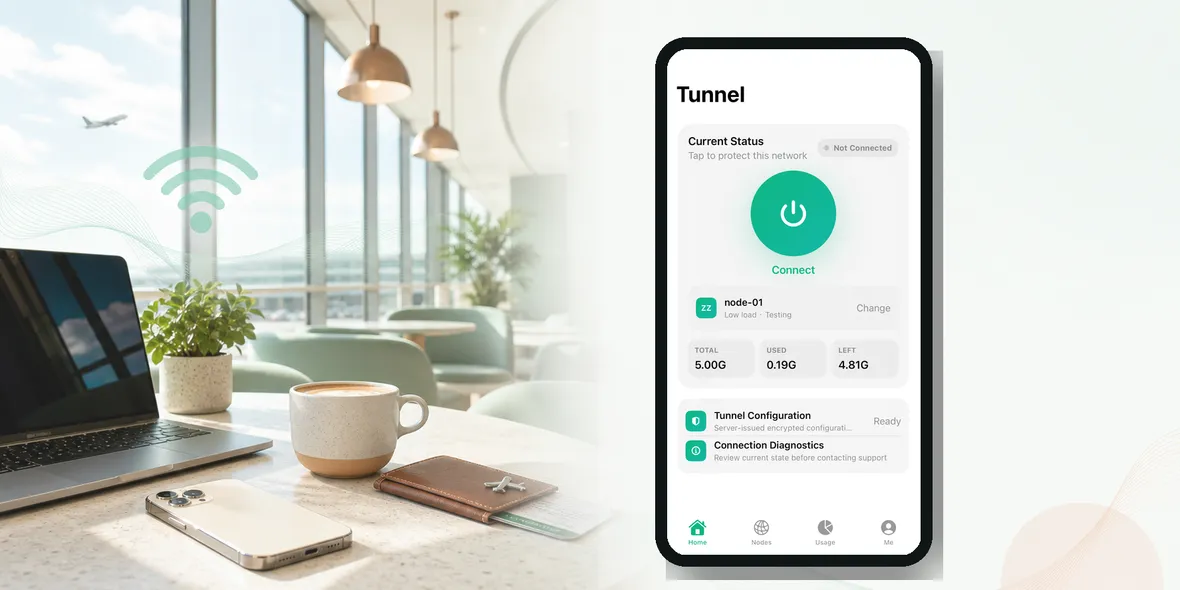
Quick Answer
A VPN on iPhone creates a private tunnel for your network connection. It is most useful on public Wi-Fi before you open personal accounts, work tools, travel bookings, or pages that require signing in.
Best For
Search Intent
The reader wants a simple explanation of what a VPN actually does on iPhone.
Shareable Angle
A VPN is useful, but it is not magic. It protects the connection path, not every part of your digital life.
The simple answer: a VPN gives your iPhone connection a private tunnel, especially useful when the Wi-Fi network is shared and you do not control it.
This topic can sound technical, but normal users only need the practical version. You do not need to understand every network term to make better choices on public Wi-Fi.
The Plain-English Version
Think about your iPhone connection as a path. When you use home Wi-Fi, that path starts on a network you probably trust. When you use public Wi-Fi, that path starts on a network you do not manage.
A VPN helps by creating a private tunnel for that connection. It is most useful before you open personal accounts, work tools, travel bookings, or pages that require signing in.
Why Users Get Confused
VPN marketing often uses words like private, anonymous, secure, encrypted, no logs, or protected. Those words are not all the same. Some are useful. Some are too vague.
A normal user should not have to guess what the product means. The best explanation says what the VPN helps with, what it does not control, and what data the service does not collect.
A Real Example
You may use a VPN at a hotel, airport, cafe, campus, or train station before opening email, bookings, work tools, or account pages.
In that moment, the question is not whether you can become invisible online. The useful question is whether you can make the connection safer before you browse on a shared network.
What To Be Careful About
Do not let technical language hide practical risks. Be careful with:
- thinking a VPN fixes phishing
- believing it controls all app data
- using fake websites
- ignoring two-factor authentication
- expecting total anonymity
These problems are not solved by a single button. They need normal account safety habits too.
What Sovatun Says Clearly
Sovatun does not collect browsing history, visited URLs, DNS query details, or raw traffic content. This is the kind of specific statement users can understand and compare.
Some service data may still be needed for accounts, purchases, support, diagnostics, or plan usage. That is why clear privacy language should say exactly what is and is not collected.
How To Use This Knowledge
Before using public Wi-Fi on iPhone:
- confirm the network name
- turn on your VPN before personal browsing
- use trusted apps or typed website addresses
- keep two-factor authentication on
- use mobile data for very sensitive tasks
The idea is not to make every user technical. The idea is to make the next decision easier.
Where Sovatun Fits
Sovatun is designed for users who want the practical benefit without a complicated setup. It gives your iPhone a simple private tunnel for shared networks, plus clear usage so the service does not feel hidden.
Use Sovatun when you want a simple iPhone VPN without complicated setup.
Takeaway
A VPN is useful, but it is not magic. It helps with the connection layer on networks you do not control. Pair that with trusted apps, strong account habits, and clear expectations.
What Normal Users Should Remember
The technical details matter, but the user decision is simple. If you are on a network you do not control, protect the connection before doing personal things. If you are signing in, sending work information, checking private details, or opening account pages, use a safer routine.
For “What Does a VPN Do on iPhone?”, the most important distinction is between connection protection and total privacy. A VPN can help with the connection path. It does not decide whether a website is honest, whether an email is a scam, whether an app collects its own data, or whether your password is strong.
That distinction makes the advice more trustworthy. Users do not need exaggerated claims. They need to understand what the tool is good at.
A Simple Way To Explain It To Someone Else
You can explain it like this:
A VPN gives your iPhone a private tunnel when the Wi-Fi network is shared. It is useful before browsing on public Wi-Fi, especially before account pages. It does not replace careful clicking, strong passwords, or two-factor authentication.
That explanation is short, but it is more honest than saying a VPN makes everything private.
Questions To Ask Any VPN
Before trusting a VPN, ask:
- Does it explain what it does in plain language?
- Does it say what data it does not collect?
- Does it avoid impossible anonymity claims?
- Does it show connection status clearly?
- Does it fit the public Wi-Fi situations I actually face?
Sovatun is built around that practical standard: simple iPhone use, visible usage, official locations, and clear data boundaries.
Quick Questions
Does an iPhone VPN protect every app and website?
A VPN helps route network traffic through a private tunnel, but apps and websites may still collect their own account, usage, or analytics data after you sign in.
Do I need technical setup to use an iPhone VPN?
Not necessarily. Sovatun is built around download-and-use simplicity, with official locations built in instead of asking users to import unknown VPN configurations.
What should normal users remember about VPNs?
Use a VPN before personal browsing on networks you do not control, but keep using strong passwords, two-factor authentication, trusted apps, and careful link habits.